
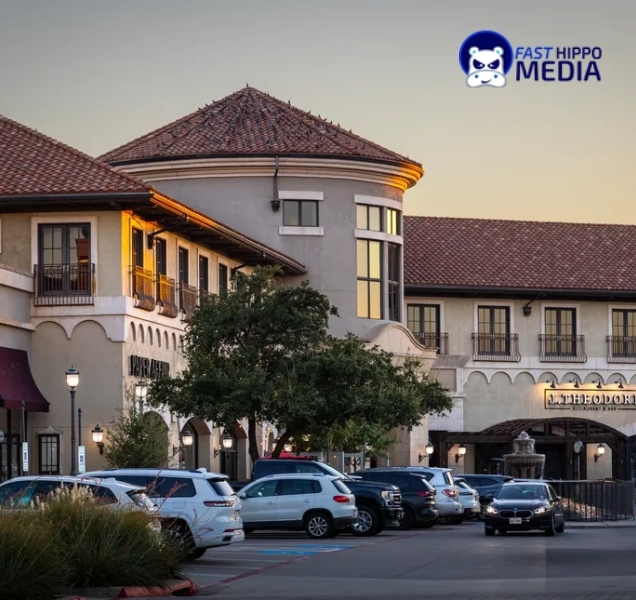
Starwood households are among the heaviest early adopters of AI search in the metro. They ask ChatGPT, Claude, Perplexity, and Gemini for the same recommendations they once Googled — and they trust the answers. Fast Hippo Media builds Answer Engine Optimization for businesses serving Starwood and the surrounding gated communities, engineered to get you cited verbatim by the AI engines this audience actually uses.
Starwood households drive the highest AI-search-adoption rate in any Frisco demographic we monitor. The combination of high household income, high educational attainment, heavy Apple device penetration, and professional or administrative occupations produces an audience that adopts new search behaviors years before mass-market audiences catch up. By mid-2026, the share of high-intent purchase decisions in this audience that touched an AI engine somewhere in the research journey is substantial.
For a business selling premium home services, private wealth, boutique medical, or luxury real estate to this audience, AEO is the difference between being on the short list and being invisible. Fast Hippo Media builds the citation graph that gets you on the short list, from our office at 7700 Preston Rd — ten minutes from the Starwood guardhouse, in the same ZIP as the buyers.
Four factors converge to make Starwood one of the heaviest AI-search-adoption demographics in north Texas:
Educational attainment. 58%+ bachelor’s or graduate degrees. AI search adoption tracks linearly with educational attainment in U.S. demographic surveys.
Professional/administrative occupations. 92%+. These professionals are already using AI tools in their workflows, which normalizes the behavior in personal search as well.
Apple device dominance. Heavy Mac, iPhone, iPad penetration. Apple’s native AI integrations (and Safari ChatGPT integration) put AI search one tap away from every web session.
Time-poor, research-driven decision style. AI engines produce comparable, structured answers across multiple candidates faster than Google — a meaningful advantage for an audience that values time over price.
AI engines weight citations based on a combination of signal types. For premium-audience recommendation queries (which is what most Starwood-relevant queries are), the signals that matter most:
Authoritative-source citation density. AI engines treat industry publications, well-known consumer publications (D Magazine, Town & Country, regional Texas Monthly coverage), and credible niche directories as high-trust citation sources. Businesses cited in those sources surface in AI recommendations disproportionately.
Real review depth and recency. Both volume and substantive content. AI engines ingest review text directly and use it to evaluate quality. Vague three-word reviews carry far less weight than detailed customer accounts.
Structured site content. FAQPage schema, Service schema with explicit areaServed, BreadcrumbList — the machine-readable signals that tell AI engines what you do, where you do it, and who you serve.
Founder and team credentials. Real human bios, certifications, awards, and credentials drive citation for credibility-sensitive categories (medical, financial, legal, premium services).
Topical depth. Real, substantive content on the subjects your buyers research. Not 500-word filler. Real, expert-driven, citation-worthy resources.

Audience and question mapping. We map the actual question queries the Starwood demographic uses for your category, drawn from real People Also Ask data, AI-engine response audits, autocomplete, and your customer call transcripts.
Credibility content build. Bios with real credentials, case studies with real outcomes, founder content where applicable, and the kind of substantive long-form content the audience actually engages with.
Answer-first content production. Every important page rewritten around question-form H2s with direct, sub-60-word answers and FAQPage schema. Service schema with areaServed = Starwood, Phillips Creek Ranch, Newman Village, Hollyhock as explicit Place entities.
Earned citation campaign. PR outreach to D Magazine, Frisco Style, Dallas Business Journal, Town & Country, and the niche category outlets your buyers read. Real PR, no link spam.
Continuous monitoring. Weekly AI Overview citation tracking and monthly LLM citation audits across ChatGPT, Claude, Perplexity, and Gemini, with biweekly iteration cycles.
AEO measurement tuned to a long-cycle, credibility-driven audience:
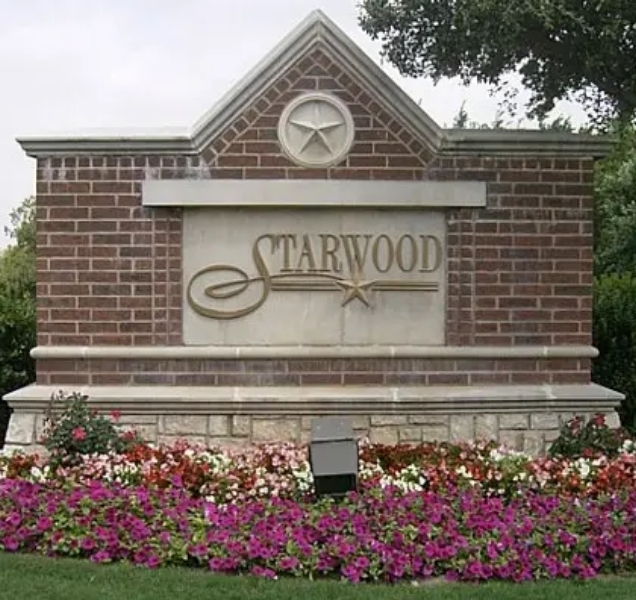
AEO engagements for businesses serving Starwood typically start at $5,000 per month. Most programs run $6,500–$12,000 monthly, often delivered as a stack with AI SEO and selective Content Everywhere℠ components.
Yes — disproportionately. Small high-net-worth audiences punch above their weight in AI-search adoption and average transaction size. The compounding citation moat AEO builds is materially valuable for any business with $1M+ annual revenue tied to this audience profile.
Initial AI Overview citations typically appear inside 60–90 days when the foundation work is done. LLM citation density takes 3–6 months to mature because the underlying source ecosystem refreshes on a slower cadence.
Yes — Apple integrations with ChatGPT, Siri’s underlying search, and Spotlight all draw from overlapping but distinct sources. The Apple ecosystem skews further toward AI-search adoption than Android in the demographics we track in Frisco. Apple Maps and Siri optimization are core components of every west Frisco AEO engagement.
In practice, yes. The signal mix that drives citations in luxury categories weights authoritative-press placements, founder credentials, and substantive review content more heavily than in commodity categories. We build the program around that mix.
No. AEO is built on top of strong SEO foundations and is most powerful when delivered alongside AI SEO, not as a replacement. The disciplines share infrastructure and reinforce each other.



 (469) 677-7725
  info@fasthippomedia.com
