(214) 272-7034
  info@fasthippomedia.com



Old house jobs on the Westside of Colorado Springs come from a housing stock unlike the rest of the city: in ZIP 80904, around Old Colorado City, about one home in five was built before 1940, against roughly one in twenty citywide. For an electrician, plumber, painter, or remodeler, that single number decides which pages to build, which federal rule to put on the site, and which searches are worth chasing.
TL;DR
The Westside ZIP 80904 has an unusually old housing stock. Census Bureau survey data for 2020 to 2024 counts 2,290 of its 11,602 homes as built in 1939 or earlier, close to 20 percent, while the whole of Colorado Springs sits near 5 percent. Old homes produce specific searches: rewiring, galvanized pipe, sewer lines, lead-safe painting. Any trade that disturbs paint in a pre-1978 home needs EPA Renovation, Repair and Painting certification, and Colorado has no state program of its own, so EPA runs it here. The Old Colorado City commercial strip is on the National Register, which by itself places no federal limits on private owners; the city’s separate overlay zone is what triggers board review. Build pages around the house, not the city name.
How Old Are the Houses Around Old Colorado City?
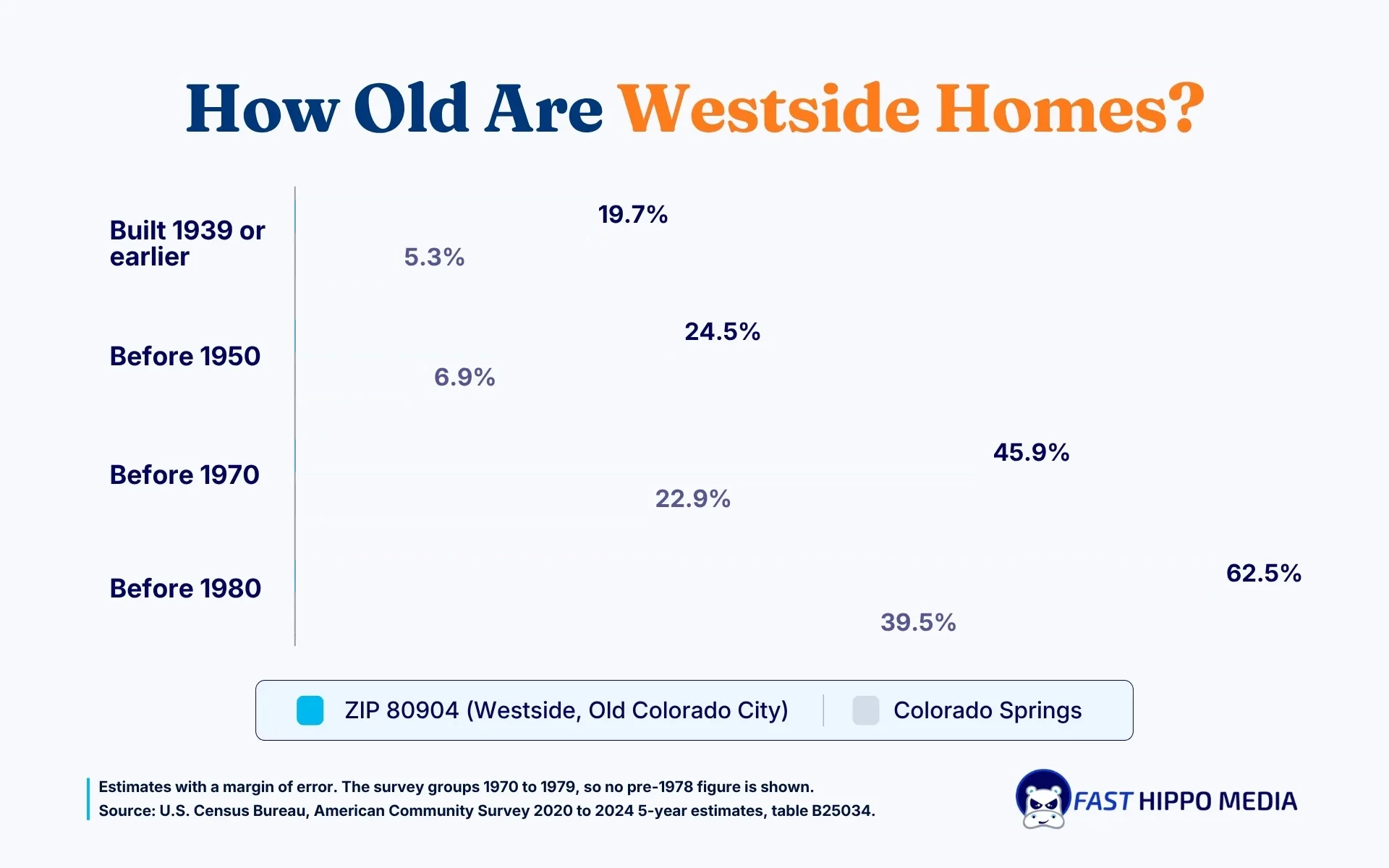
Older than almost anywhere else in the city, with a gap wide enough to plan a business around. The Census Bureau’s American Community Survey table on the year a structure was built, the 2020 to 2024 five-year estimates for ZIP 80904, puts the numbers side by side with the city.
| Built | ZIP 80904 | Share | Colorado Springs | Share |
|---|---|---|---|---|
| 1939 or earlier | 2,290 | 19.7% | 11,235 | 5.3% |
| Before 1950 | 2,844 | 24.5% | 14,659 | 6.9% |
| Before 1970 | 5,328 | 45.9% | 48,459 | 22.9% |
| Before 1980 | 7,252 | 62.5% | 83,375 | 39.5% |
| All homes counted | 11,602 | 211,353 |
Read the second row slowly.
A home in 80904 is about three and a half times as likely to predate 1950 as the average home in Colorado Springs. That is a survey estimate with a margin of error, so treat the percentages as close rather than exact, but the direction is not in doubt.
The survey groups the 1970s into one bucket, so it cannot say how many homes predate 1978, the year that matters for lead paint. What it does say is that somewhere between the pre-1970 share (46 percent) and the pre-1980 share (63 percent) of Westside homes fall under the federal lead rule. Roughly half to three in five is the honest way to put it.
Why the age explains the district
Colorado City was formally organized on August 13, 1859, and was the first permanent settlement in the Pikes Peak region, according to History Colorado’s record of the district. Colorado Springs annexed it in 1917. The streets around Bancroft Park grew up long before the rest of the city spread north and east, which is why the bungalows one block off West Colorado Avenue have the wiring, pipe, and paint histories they do.
The Searches an Old House Produces
A Westside homeowner rarely types a trade name and a city. They type the problem the house handed them. From the questions we collected while researching this post, the patterns look like this:
- Does knob and tube wiring need to be replaced in Colorado?
- Do I need an EPA-certified contractor to paint a pre-1978 house?
- What is the six-square-foot rule for lead paint?
- How do I find a lead-safe certified contractor?
- Is Old Colorado City a historic district?
- Will insurance cover a house with knob and tube wiring?
Every one of those is a question with an answer, and a trade business that answers it on its own site is in the conversation before the homeowner ever compares quotes. A page titled with the city name and a list of services answers none of them.
This is also where a small Westside shop can beat a national brand. Franchise location pages are written once and cloned across a hundred cities. None of the top local pages we checked for Westside rewiring cited the housing data, the lead rule’s thresholds, or the difference between the historic listing and local review. That gap is the opening.
Take it before someone else does.
The Federal Lead Rule Every Westside Job Runs Into
If a job disturbs paint in a home built before 1978, the firm doing it has to be certified. EPA puts it plainly on its Renovation, Repair and Painting page for contractors: anyone paid to perform work that disturbs paint in housing and child-occupied facilities built before 1978 must be certified. That covers far more than painters. An electrician cutting into plaster to fish new wire is disturbing paint. So is a plumber opening a wall.
The same EPA page sets the exemption for small jobs. Minor repair and maintenance that disturbs six square feet or less of paint per room inside, or 20 square feet or less on the exterior, falls outside the rule. We saw a contractor site that swaps those two numbers. It is an easy slip, and it is the kind of error a careful homeowner notices.
Colorado matters here too. EPA lists the states authorized to run their own program, and Colorado is not among them. So the certification a Westside firm needs is EPA’s, and EPA’s own firm locator is the public lookup a homeowner can use to check it.
What to publish because of the rule
| On your site | Why it helps the homeowner decide |
|---|---|
| Your firm’s RRP certification, stated plainly | They can check it against EPA’s locator before calling |
| A short page on how you contain dust in a pre-1978 room | It answers the question they are already asking |
| The six- and twenty-square-foot thresholds, stated correctly | It shows you know the rule better than the last bidder |
| Photos of real containment on a real job | Proof a stock photo cannot give |
None of it is marketing copy in the usual sense. It is the paperwork and practice a careful buyer checks anyway, moved to where they can see it first.
A National Register Listing Is Not the Same as Board Review
Owners and contractors on the Westside mix these two up constantly, and the mix-up costs jobs in both directions. Some homeowners delay a project because they assume “historic” means permission. Some contractors promise a quick exterior job without checking whether the parcel sits in a zone that requires review.
History Colorado’s record shows the Old Colorado City Historic Commercial District was listed on the National Register of Historic Places on November 2, 1982. It is a commercial district: 27 properties along the north side of Colorado Avenue, running from 24th Street to 2611 Colorado Avenue. It is not the residential blocks around it.
The National Park Service, which keeps the Register, answers the question directly in its National Register FAQ: listing in the National Register places no federal restrictions or requirements on a private property owner, who may do as they wish within the framework of local laws or ordinances.
The local layer is the one with teeth. The City of Colorado Springs says properties zoned with its Historic Preservation Overlay must go through additional review before construction or modification, and that the Historic Preservation Board decides those applications. The city’s own historic preservation page is where that rule lives. The district the city’s review page names by example is the Old North End, not Old Colorado City.
So the accurate advice for a Westside job is short.
Check the parcel’s zoning for the overlay before quoting exterior work. A Register listing on its own does not add a review step for a private owner.
How to turn this into a page
A trade that writes one clear page on this, in plain words, answers a question the homeowner has, and most competitors skip. Keep it factual: what the Register is, what the overlay is, how to check a parcel, and what your firm does when a job does fall inside a review zone. Do not claim a property is in the overlay unless you have checked it.
What Pages a Westside Trade Should Build First
Start from the house and the problem, then add the place. Here is a page plan by trade, each carrying one fact from the sections above.
| Trade | Page subject | The fact that makes it local |
|---|---|---|
| Electrician | Rewiring homes built before 1950 | About one Westside home in four predates 1950 |
| Plumber | Replacing old supply and sewer lines in older homes | Nearly half of 80904 homes predate 1970 |
| Painter | Lead-safe interior and exterior painting | RRP certification and the six- and twenty-square-foot limits |
| Remodeler | Opening walls in a pre-1978 home | Dust containment under the federal rule |
| Any exterior trade | Historic district questions answered | Register listing versus the city’s overlay |
Two rules keep these pages useful rather than thin. Each page answers the question in its first paragraph, before any sales language. And each page is about one problem, so a homeowner searching for sewer line trouble never lands on a page that is mostly about water heaters.
The same thinking powers our own Old Colorado City digital marketing work, where we split the district into its visitor-facing strip and the neighborhood trades behind it. They search differently, so they get different pages.
Which Paid Channel Fits a Westside Trade?
For trades, the paid channel that most often sits alongside the Map Pack is Google’s pay-per-lead product. Our page on Local Services Ads covers how it works and who qualifies. It suits an electrician or plumber whose calls come from urgent problems, because the ad shows up at the moment the problem arises.
It is a poor fit for the slow, researched jobs this post is mostly about. A homeowner comparing lead-safe painters for a spring project reads pages first. For that buyer, the pages in the table above do more than any ad.
Seasons Still Shape the Calendar
The visitor season runs the storefront side of Old Colorado City, and we covered how the tourist months play out in the Map Pack separately. Trades live on a different rhythm, set by weather rather than visitors.
Exterior paint and siding work ends when nights turn cold, so the pages about exterior lead-safe work should be live and indexed before spring planning starts, not when the first warm week arrives. Interior rewiring and plumbing carry on all winter, which makes January a sensible month to publish the electrical and pipe pages. That is trade judgment rather than a published schedule, but it matches how the work actually moves.
Proof That Holds Up for an Older-Home Job
A homeowner with a 1920s bungalow is hiring someone to open walls in a house they love. The proof that works is specific.
- Job photos from homes that look like theirs, with the street name only if the customer agreed.
- Reviews in the customer’s own words. You may ask every customer for an honest review; you may not offer anything for one or tell them what to write.
- The certification number and the name on it.
- A clear answer on permits: which of your jobs normally need one and who pulls it.
Plumbing firms in particular tend to underplay this. Our notes on marketing for plumbing companies go further into how service pages and reviews work together for that trade. And if you also take jobs in the hillside homes on the southwest side, those buyers verify differently again; our page on how we work with Broadmoor-area businesses explains why.
Your First Westside Page, Written This Month
Pick the one page from the plan above that matches the work you most want more of, and write it this month. Open with the answer to the homeowner’s question, state your EPA certification if the work touches paint in a pre-1978 home, and add one real job photo. Then check that your Google Business Profile category matches the same work, because a mismatch between the profile and the page is the most common reason a good page never earns calls.
If you would rather have the page plan, the profile check, and the Westside research done for you, talk to Fast Hippo Media. We will tell you which of the pages above your market will actually reward, and which it will not.
Frequently Asked Questions
By answering the problems older homes create: rewiring, old pipes, lead-safe painting, and historic district questions. About one in 80904 homes predates 1940, so pages built around those problems match what Westside homeowners actually search.
Yes, if the job disturbs paint in a home built before 1978, beyond EPA’s minor-repair limits of six square feet per room inside or 20 square feet outside. Colorado has no state program, so EPA certification applies.
Its commercial core is. History Colorado records the Old Colorado City Historic Commercial District on the National Register since November 2, 1982, covering 27 properties along Colorado Avenue. The nearby residential streets are not part of that listing.
No. The National Park Service says listing places no federal restrictions on a private owner. Local rules still apply, and in Colorado Springs the city’s Historic Preservation Overlay zone is what requires board review before work.
Census survey estimates for 2020 to 2024 count 2,290 of 11,602 homes as built in 1939 or earlier, about 20 percent, and nearly 46 percent were built before 1970. Citywide, only about 5 percent predate 1940.