(214) 272-7034
  info@fasthippomedia.com



TL;DR
Hyperlocal SEO targets the neighborhood, not the whole city. It wins because Google ranks local results partly on how close you are to the searcher, so a business optimized for a specific area and a specific set of near-me queries beats a competitor who only ranks for the metro name. The catch is building genuinely useful neighborhood pages rather than thin, cloned ones Google treats as spam.
Most local businesses optimize for their city and stop there. That leaves the searches most likely to convert on the table, because a person standing three blocks away searching “plumber near me” is a far better lead than someone typing the city name from across town, and they are judged by different signals. This is where our local SEO work gets granular, so here is how hyperlocal SEO actually works and how to do it without tripping Google’s spam rules.
What Hyperlocal SEO Actually Is
Local SEO targets a city or metro. Hyperlocal SEO targets the level below that: neighborhoods, districts, ZIP codes, and the area within a short drive of where the customer is standing. It pairs what you do with exactly where you do it, so instead of competing for “dentist in Dallas,” you also compete for the specific communities you actually serve.
This matters because a metro isn’t one market. A business can rank respectably for the city name and still be invisible for the neighborhood searches that sit closer to a booking. Hyperlocal SEO is the work of showing up in those smaller, higher-intent moments, and for a service business it is often where the real pipeline hides, because the closer a searcher is to booking, the more specific their search tends to be.
Why Proximity Is the Lever
Hyperlocal works because of how Google ranks local results. Google weighs three things: relevance, distance, and prominence- how local results are ranked. Distance, meaning how close you are to the person searching, is one of the three, and it is the one a city-level strategy ignores.
That single factor is why a smaller, closer business can outrank a larger, better-known one for a near-me search. When someone searches with local intent, Google is trying to serve what is genuinely nearby and relevant, so being the obvious answer in a specific area is a real, winnable advantage. You cannot move your address, but you can make sure Google clearly understands which areas you serve and that your pages speak to them, which is most of the hyperlocal game.
The Near-Me Reality You Are Optimizing For
Near-me searching is not a niche. It runs into the hundreds of millions of queries a month and is overwhelmingly done on a phone, often by someone ready to act, according to industry data compiled by Shopify. Just as important, you no longer need the literal words “near me” to be in a near-me search. Google infers local intent from a phone’s location, so a search for “emergency electrician” from a mobile device is treated as a near-me search whether or not those two words are typed.
That changes what you are optimizing for. Every local-intent query your customers make is, in effect, a proximity search, which means the neighborhoods and service areas you cover are competing on your behalf all day whether you have optimized for them or not. Hyperlocal SEO is simply deciding to compete on purpose.
Neighborhood Landing Pages, Done the Right Way
The core hyperlocal asset is the neighborhood or service-area landing page: a page that speaks to one specific area you serve. Done well, these pages rank for the local searches a single city page never reaches, because they match the searcher’s actual location and language.
Done well is the operative phrase. A good neighborhood page is genuinely about that area: the specific services people there ask for, real local detail, landmarks and access, honest specifics about how you serve that community. It reads like it was written for that neighborhood because it was. That is what earns the ranking, and it is also what keeps the page on the right side of Google’s rules, which brings us to the trap most businesses fall into.
The Doorway-Page Trap
Here is the mistake that sinks most hyperlocal attempts. A business decides to target forty neighborhoods, writes one page, and clones it forty times with the area name swapped in. It feels like a shortcut. It is also exactly what Google’s spam policy calls a doorway page: a set of near-identical pages created to funnel searchers from many locations to the same destination, adding nothing of their own Google, spam policies.
Google treats those pages as spam, and the same policy that catches doorway pages catches thin, mass-produced location content generally. The pages either fail to rank or drag the site down. The fix is not fewer neighborhoods; it is real pages: each one genuinely unique to its area, worth landing on for a resident of that place. If your neighborhood page would read identically to the next town’s with the name changed, it has not earned its spot, and it is a liability, not an asset. Building these properly is slow, and it is the difference between hyperlocal SEO that compounds and a template that gets penalized.
Set Your Google Business Profile Service Areas
Beyond your pages, your Google Business Profile is where you tell Google which areas you actually serve, and getting it right is foundational for hyperlocal visibility. For a business that goes to the customer, set your service areas honestly to the places you cover rather than inventing addresses you do not have, which is its own policy violation.
Keep the profile’s core facts consistent with your site and the rest of the web, because that consistency is what lets Google confidently associate you with an area. A well-kept Google Business Profile that clearly states your service areas, paired with neighborhood pages that back it up, is the combination that makes a business legible at the neighborhood level rather than only the city one.
How to Choose Which Neighborhoods to Target
You cannot build a real page for every area at once, and you should not try, so the first strategic decision is which neighborhoods earn a page first. Three questions sort that quickly.
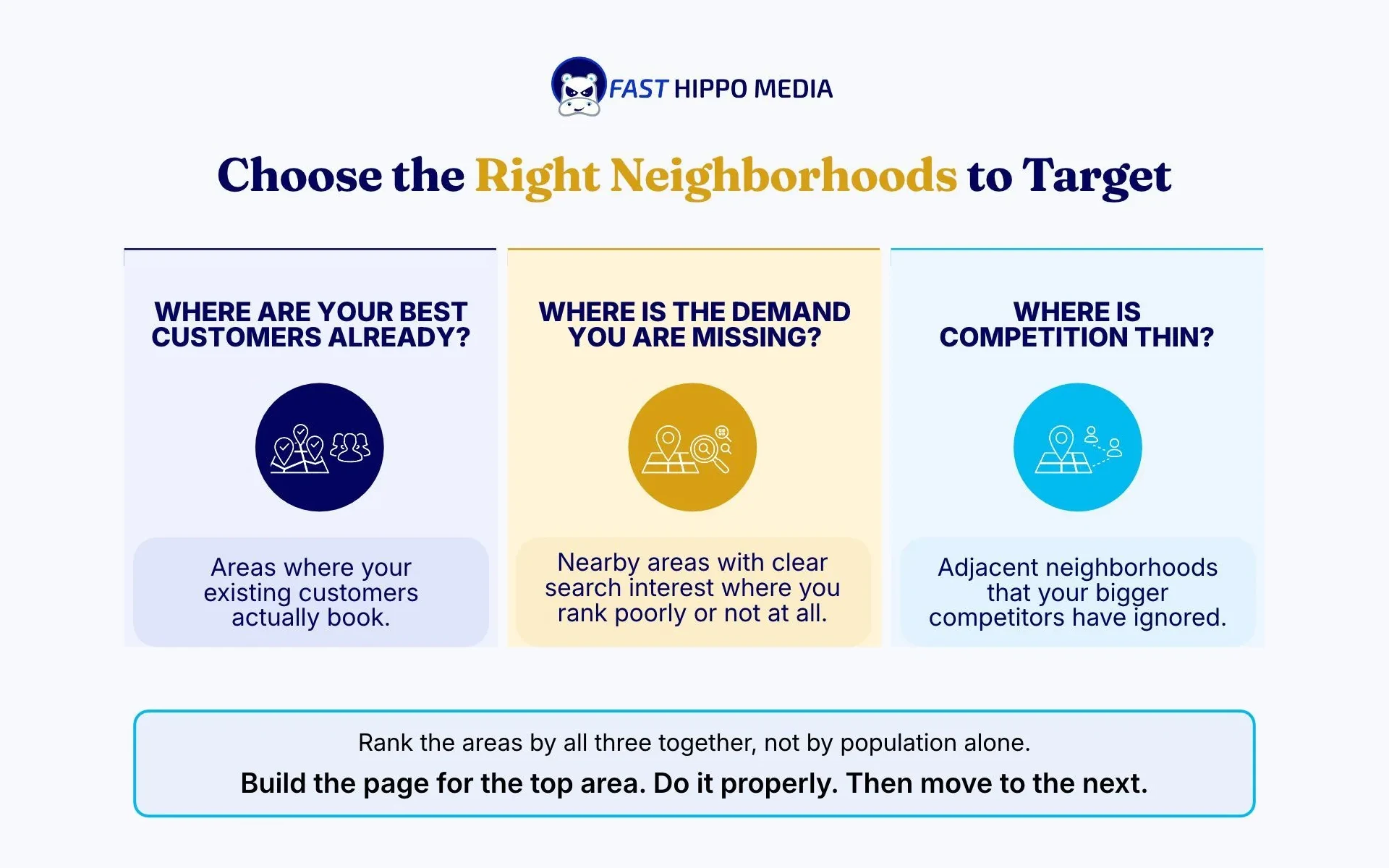
Where are your best customers already? Pull your own records and see which areas actually book, because a neighborhood that already converts is worth reinforcing before you chase a new one. Where is demand you are missing? Look for nearby areas with clear search interest in your service where you rank poorly or not at all, since those are the winnable gaps. And where is competition thin? An adjacent neighborhood that your bigger competitors have ignored is far easier to own than the dense core everyone fights over.
Rank the areas by those three together, not by population alone. A smaller neighborhood where you already have customers, real demand, and weak competition will return more than a large one where you are starting from nothing against entrenched rivals. Build the page for the top area, do it properly, and only then move to the next. This is how a hyperlocal program stays honest and avoids the temptation to mass-produce pages just to cover the map.
Signs Your Hyperlocal SEO Is Working
Hyperlocal progress does not always show up in your overall traffic number, because the wins are concentrated in specific places, so you have to look where the work is happening. A few signals tell you it is landing.
The clearest is your own near-me check: search your core services from a phone in each target neighborhood and watch your position climb over the weeks. Beyond that, watch for calls, direction requests, and form fills that trace back to specific areas rather than the whole metro, since that is the pattern of neighborhood demand turning into pipeline. And watch your Google Business Profile activity for the areas you targeted, because rising views and actions there are the profile-side echo of the same progress.
What you should not expect is an overnight jump. Hyperlocal signals build as Google recrawls your pages, associates you more confidently with each area, and sees the reviews and consistency accumulate. That slow, area-by-area climb is exactly what makes it durable once it arrives, and it is why the measurement that matters is per-neighborhood, not the single sitewide line.
How Hyperlocal Fits With Everything Else
Hyperlocal SEO is not a separate silo. It sits underneath your city-level local SEO and feeds the same profile and reviews that everything local depends on. If you serve several metros, it is also how each of your geo pages, such as our work on Dallas SEO and Plano SEO, earns depth in the communities beneath it rather than sitting as a single thin city page.
It also connects to the newer contest for AI-answer visibility. The same clear, consistent, area-specific signals that win neighborhood searches help AI assistants understand where you operate, which is a related but distinct problem we cover in why you can rank on Maps yet miss the AI local picks. Do the hyperlocal groundwork well, and both channels benefit from it.
Where to Start This Week
You do not need forty neighborhood pages to begin. Start with the two or three areas that matter most to your business, the ones where your best customers actually are.
For each, confirm your Google Business Profile service area includes it, then build one genuinely useful page about serving that specific community, with real local detail and the services people there ask for. Search your own near-me queries from a phone in that area and see who shows up. That short list of two or three well-built areas will teach you more, and rank better, than forty cloned pages ever would, and it gives you a template for expanding one honest page at a time.
The Hyperlocal Payoff Is Durability
The reason hyperlocal work is worth the slower pace is that it holds. A genuine neighborhood presence, built on real pages, an accurate profile, and steady reviews, is not something a competitor can copy over a weekend. Proximity is fixed, but the signals that tell Google you own an area are earned, and once earned, they keep working. The businesses that dominate their neighborhoods did the unglamorous version of this and let it compound, which is exactly the plan our local SEO engagements run for a service business. Start with two or three areas you can genuinely own, build each page as if a resident there would grade it, and expand from proof rather than ambition. That is the whole method, and it beats a hundred cloned pages every time.
Frequently Asked Questions
Local SEO targets a whole city or metro. Hyperlocal SEO targets the level below that: neighborhoods, districts, and near-me searches, pairing your service with the specific areas you cover so you rank for searches a single city page never reaches.
Because Google ranks local results partly on distance, meaning how close you are to the searcher. A business clearly optimized for a specific area can outrank a larger competitor that only targets the city name for those near-me searches.
Only if each page is genuinely unique to its area. Cloning one page across many neighborhoods with the name swapped is a doorway page, which Google’s spam policy penalizes. A few real, area-specific pages beat many thin ones.
Set your service areas honestly to the places you actually cover, never invent addresses, and keep your core business facts consistent with your website and the rest of the web so Google can confidently associate you with those areas.