(214) 272-7034
  info@fasthippomedia.com



TL;DR
Choose a Bing Ads agency that treats Microsoft Advertising as its own platform, not a copy of your Google campaigns. The right partner holds Microsoft Advertising Partner status, understands Bing’s different auction and audience, reports transparently, and can show real results. The wrong one imports your Google account and calls it done.
Bing is the channel most businesses underrate. It carries a smaller share of search than Google, but its audience skews older and wealthier, its clicks cost less, and competition for them is thinner. That combination makes it one of the better-value paid channels in 2026, and capturing that value depends heavily on who runs it. This is the work behind our Bing Ads management, so here is how to pick an agency that does it well.
Why Bing Is Worth Running at All
Before choosing an agency, it helps to know why the channel deserves a real one. The reach is larger than people assume. The Microsoft Search Network, which includes Bing, Yahoo, and partner sites, reaches hundreds of millions of users a month and, by Microsoft’s own account, is the second-largest search network after Google.
The economics are the draw. According to Backlinko’s Bing usage data, the audience skews toward higher household incomes, with a large share of US users earning six figures. And the clicks are cheaper: Searchlab’s 2026 Microsoft Ads benchmarks put the average cost per click on Microsoft Advertising well below Google’s, often around a third less. For a business with a fixed budget, cheaper clicks from a higher-income audience are a combination worth running properly rather than ignoring.
The Mistake Most Agencies Make
Here is the single most important thing to screen for. Most agencies treat Bing as an afterthought. They export your Google Ads campaigns, hit the import button in Microsoft Advertising, and consider the job finished. That approach leaves money on the table, because Microsoft Advertising is not Google with a different logo.
The auction dynamics differ. Match type behavior differs. The audience composition differs, skewing older, more desktop-heavy, and higher-income. Device and demographic performance that works on Google can be wrong on Bing. An agency that simply mirrors your Google account is not managing the channel; it is duplicating it, and duplication is why so many Bing accounts quietly underperform. The first question to ask any prospective agency is how they build Bing campaigns differently from Google ones. A blank look is your answer.
What a Real Bing Ads Agency Looks Like
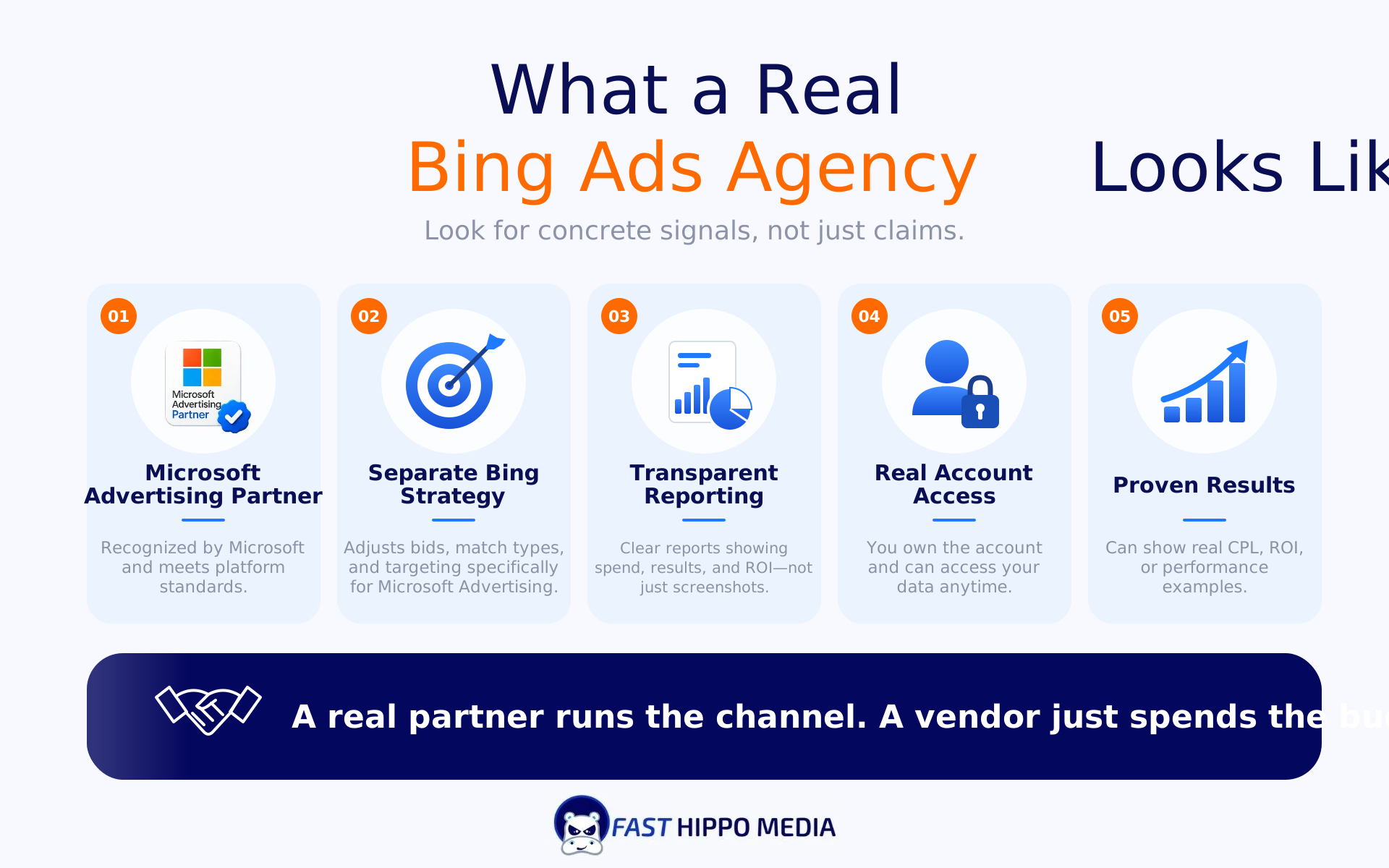
A genuine Microsoft Advertising specialist stands out on a handful of concrete signals, not on claims.
- Microsoft Advertising Partner status. This certification is a baseline trust signal that the agency is recognized by the platform and maintains a standard of practice.
- A separate Bing strategy. They can explain how they adjust bids, match types, and audience targeting for Microsoft’s auction rather than copying Google.
- Transparent reporting. Regular, clear reports that show what is being spent and what it returns, in plain terms, not a monthly screenshot with no commentary.
- Real account access. You own the account and can see inside it. An agency that hides the account behind their own login is a risk to your data and your continuity.
- Results they can point to. Concrete examples of cost per lead or return, not adjectives.
None of these are exotic requests. They are the difference between a partner who runs the channel and a vendor who parks your budget in it.
How Bing’s Audience Should Change the Strategy
The reason a Bing-specific strategy matters is that the people on the platform are not the people on Google, and a good agency builds around that difference rather than ignoring it.
Bing’s audience skews older, more desktop-heavy, and higher-income than Google’s. That changes real decisions. Bid adjustments for desktop should usually be more aggressive than you would set on Google. Ad copy can speak to a more established, less bargain-driven buyer. Dayparting often shifts, because a desktop-heavy, working-age audience behaves differently across the week than a mobile-first one. Device targeting that you would never bother with on Google can be a genuine lever on Bing.
An agency that understands this will ask about your customer before it touches your account, because the platform’s audience only becomes an advantage if the campaigns are built for it. One that imports your Google settings inherits Google-shaped assumptions that quietly waste budget on a differently-shaped audience. When you interview an agency, listen for whether it talks about who is on Bing, not just how to move your existing campaigns onto it. That single distinction predicts most of the results gap between a specialist and a generalist.
What Good Reporting Looks Like
Reporting is where you find out, month after month, whether the agency is actually working the channel. The bar is not a wall of numbers. It is clarity about what was spent, what it returned, and what changes are planned next.
A strong report ties spend to the outcomes your business cares about: phone calls, form fills, sales, not just impressions and clicks. It explains what changed since last month and why, in plain language rather than platform jargon. It flags what is working so budget can move toward it, and what is not so budget can move away. And it comes with a person who can walk you through it and answer questions, not a dashboard link sent without comment.
Weak reporting is the opposite: a monthly screenshot of clicks and spend, no narrative, no connection to revenue, and no plan. If an agency cannot show you a sample report before you sign, assume the reporting will be an afterthought, exactly like the channel itself in the wrong hands. Good reporting is not administrative overhead. It is the visible evidence that someone is thinking about your account.
Red Flags to Walk Away From
The warning signs are as telling as the green lights. Watch for these.
An agency that cannot describe how Bing differs from Google is telling you it does not run Bing as its own channel. An agency that will not give you direct access to your own account is protecting itself at your expense. An agency that reports only spend and clicks, never customer actions or revenue, is measuring activity rather than outcomes. And an agency that promises a specific result should end the conversation on its own, because no one can honestly assure paid-search outcomes, which depend on your market, your offer, and your competitors as much as on the management.
That last point matters beyond Bing. A promised placement or a promised number of sales calls is a broader red flag across all of search, and a credible agency will talk in ranges and probabilities, not certainties.
Questions to Ask Before You Sign
A short, specific interview separates the specialists from the generalists. Ask how they would structure your Bing campaigns differently from your Google ones. Ask which Microsoft Advertising features they use that have no Google equivalent. Ask to see a sample report so you know what visibility you will get. Ask how they handle the audience and device differences on the platform. Ask what access you will retain to your own account. The answers reveal, quickly, whether someone actually knows the platform or is planning to import and hope.
You are not looking for perfect answers. You are looking for specific ones. Specificity is the tell that an agency has spent real time inside Microsoft Advertising rather than treating it as a box to tick alongside Google.
Why Local and Service Businesses Should Not Skip Bing
There is a common belief that Bing only matters for big national advertisers, and it is wrong in a way that costs local businesses money. The platform’s audience and economics often suit a local service business better than the business expects.
The people searching on Bing skew older and higher-income, which lines up closely with the customers many home service, professional, and higher-ticket local businesses actually want. The cheaper clicks mean a local budget stretches to more leads, and the thinner competition means less bidding pressure than the same keywords face on Google. For a plumber, a law firm, or a clinic, that combination can turn a channel most competitors ignore into a quiet source of well-qualified calls.
The catch is the same one that runs through this whole guide: it only works if the campaigns are built for Bing and managed by someone who takes the channel seriously. A local business that lets an agency import its Google campaigns and forget them gets the worst of Bing: spend with no attention. A local business whose agency actually works the channel gets the best of it: cheaper leads from a higher-income audience its competitors never bothered to chase. When you evaluate an agency, ask specifically how they would run Bing for a business like yours, in your area, for your service. The specificity of that answer tells you whether they see the local opportunity or dismiss it out of habit like most of their peers.
Where Bing Fits in Your Wider Strategy
A good agency will also be honest about where Bing sits in the mix. For most businesses, it complements Google, not replaces it, a cheaper, higher-income channel that stretches a budget further once Google is running well. Plan it alongside your Google Ads and the rest of your PPC so the channels support each other rather than compete for the same budget with no plan.
The right agency thinks in terms of your whole paid presence and tells you when Bing is worth scaling and when your money is better spent elsewhere. An agency that pitches Bing as a magic channel, or refuses to run it at all, is failing you in opposite directions.
A practical way to test this during the sales process is to ask how they would split a fixed budget across Google and Bing for your business, and why. A thoughtful answer weighs your audience, your margins, and where competition is thinnest, and it changes depending on the specifics you give. A weak answer is a fixed formula applied to everyone, or a push to pour everything into one platform without a reason tied to your situation. The agency that reasons from your numbers, rather than from a template, is the one that will manage your Bing budget the same careful way once you are a client.
The Takeaway
Choosing a Bing Ads agency comes down to one question: do they run Microsoft Advertising as its own platform, or as a copy of Google? Look for Partner status, a distinct Bing strategy, transparent reporting, and real account access, and walk away from anyone who imports your Google campaigns, hides your account, or guarantees results. Bing rewards businesses that run it deliberately, and that starts with picking a partner who takes it seriously. The agencies worth hiring treat the channel as its own craft, report on it honestly, and tell you the truth about where it fits in your mix. That is exactly how we approach Bing Ads management, and it is the standard we would want you to hold any agency to before you hand over a budget.
Frequently Asked Questions
Often yes. The clicks are usually cheaper than Google, and the audience skews higher-income, so a modest budget can stretch further, provided the campaigns are built for Bing rather than imported from Google.
For most businesses, yes. Bing works best as a complement to Google, adding a cheaper, higher-income audience once your Google campaigns are performing, rather than replacing them.
Microsoft Advertising Partner status is the baseline. It signals the agency is recognized by the platform and maintains a standard of practice, though you should still check for a real Bing strategy and transparent reporting.
No. Paid-search outcomes depend on your market, offer, and competitors as much as on management. Any agency promising a specific outcome is a red flag.