 (214) 272-7034
  info@fasthippomedia.com


The Star District concentrates three of the heaviest AI-search-adopting audiences in Frisco into 91 acres: corporate executives at McAfee and Comerica, Omni Frisco hotel guests, and high-disposable-income locals served by Cowboys Fit, Ford Center events, and the Cowboys Way restaurant corridor. AI search is reshaping how each of those audiences finds businesses, and the businesses on or adjacent to the campus that have not retooled are losing share quietly.
The Star District is 91 acres of concentrated buying power, $2 billion in Cowboys-anchored development, the Omni Frisco hotel running consistently high occupancy, Cowboys Fit drawing professional athletes and high-net-worth members, the Ford Center hosting Cowboys practice on weekdays and Frisco ISD football under the lights on Fridays, and a restaurant corridor on Cowboys Way that ranges from casual to white-tablecloth. The audiences that move through these 91 acres are not behaving the way they did even 18 months ago. AI search is the largest single reason.
This piece is a field-level look at how AI search is reshaping buyer behavior at The Star, audience segment by audience segment, and what the businesses on or adjacent to the campus need to do about it.
Why The Star is the most AI-search-mature audience in Frisco
Three audience segments converge at The Star, and all three are heavy AI-search adopters:
Corporate executives at McAfee, Comerica, the Cowboys org, and adjacent regional offices. Their workdays already include AI tools (ChatGPT, Claude, internal LLM-powered productivity software); the behavior carries into personal search. AI-search penetration in this demographic is well above 60% by mid-2026 for purchase research.
Omni Frisco hotel guests. Business and event travelers researching dinner, transit, and entertainment within walking distance of Cowboys Way. Younger demographics in this audience default to ChatGPT, Perplexity, or Apple’s Siri integration before they touch Google or a hotel concierge.
Premium locals the high-income residents and professionals who live and work within five miles of Cowboys Way. Research-heavy decisions (financial planning, medical specialty, real estate, custom build) increasingly start in LLMs.
The combined result is the most AI-search-mature audience in any 91 acres of Frisco. The businesses positioned there that ignore the shift are losing share to AI-cited competitors at compounding rates.
How hotel guests at Omni Frisco actually find dinner now
Eighteen months ago, a typical Omni Frisco guest decided where to have dinner via the concierge, a quick Google search for “best steakhouse near me,” or TripAdvisor. Today, that same guest more often pulls out a phone, asks ChatGPT or Perplexity for “best dinner spots within walking distance of the Omni Frisco at The Star,” reads the AI-generated answer with two or three named recommendations, and books from there.
For restaurants on Cowboys Way, that shift is consequential. The restaurant cited in the AI answer wins disproportionate cover share for the night. The restaurant not cited may rank well in Google organic and still go uncovered because the guest never reached Google.
The mechanics of getting cited are documented and learnable: question-form content on the restaurant’s site (“What is the best dinner near The Star?”), FAQPage schema, Google Business Profile optimization with explicit Cowboys Way address signaling, citation density on Frisco hospitality directories and local press, and review velocity programs that produce a steady drip of recent, substantive reviews. The restaurants doing this work in 2026 will own the AI-cited slot for years.
B2B vendor research in the McAfee / Comerica / Cowboys ecosystem
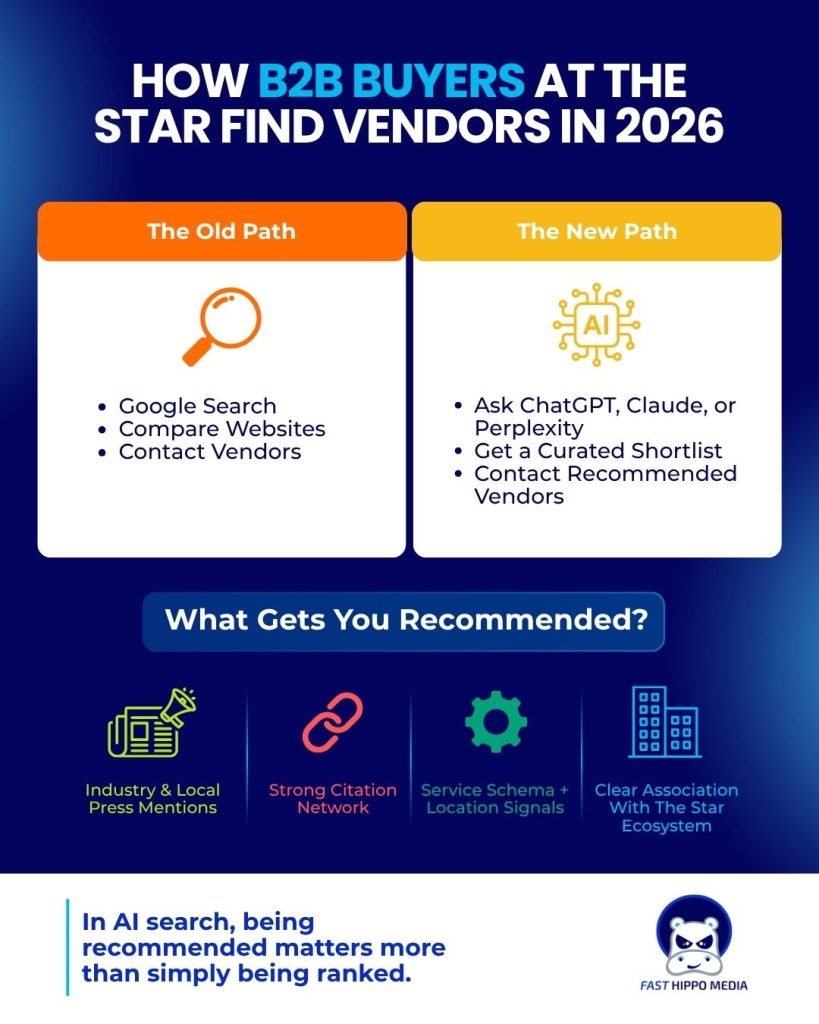
Corporate buyers at McAfee, Comerica, the Cowboys org, and the dozens of regional offices adjacent to Cowboys Way research B2B vendors differently than they did even a year ago. Increasingly, the first stop is an LLM (Claude, ChatGPT, or Perplexity) with a prompt like “what are the best [agency category / professional services / B2B tech vendor] options near our Frisco office at The Star?”
The AI engine returns a curated short list. The vendor named first or second on that list gets the inbound inquiry. The vendor in position seven of Google’s blue links, even if technically ranked there, typically does not.
For B2B vendors targeting the corporate ecosystem at The Star, the implication is concrete: account-based AEO is now a foundational discipline. Building citation density in publications the LLMs treat as authoritative (Dallas Business Journal, industry trade outlets, regional B2B publications), deploying Service schema with explicit areaServed pointing to The Star, and earning press coverage that ties the vendor entity to the campus, all of this work compounds into an AI-engine citation that drives the enterprise pipeline.
Sports performance, aesthetics, and the Cowboys Fit-adjacent buyer
Cowboys Fit draws professional athletes, high-net-worth members, and the local affluents who use the facility daily. The adjacent service economy, sports therapy, aesthetics, personal training, and premium wellness, is dense and competitive.
AI search is changing how members find those services. A Cowboys Fit member researching post-workout recovery, an aesthetics consultation, or a wellness practitioner increasingly asks Claude or ChatGPT for recommendations near Cowboys Way. The AI returns a short list. The named businesses win.
The business categories most affected: sports medicine, physical therapy, aesthetics (medspa, derm), personal training, IV therapy, and premium wellness. For businesses in these categories, AEO citation is now the primary discovery channel for the highest-value member-segment customers.
Event-night spikes and the AI Overview
Ford Center events, Cowboys practice, Frisco ISD football, concerts, and conferences generate predictable 8–12 hour windows of compressed local search demand. Restaurants, bars, parking services, and adjacent retail see their highest-volume search and booking pressure during these windows.
AI Overview now dominates the event-night auction. A search for “best dinner before Ford Center event” or “best place to eat after Cowboys practice” surfaces an AI-generated answer above the organic results. Businesses cited there capture the event-night cover share disproportionately.
For The Star’s F&B and event-adjacent businesses, the strategic implication is to build content and schema specifically for event-night intent, pre-event dinner recommendations, post-event late-night options, parking and transit information, group reservation systems, all structured for AI citation. The work is documented, measurable, and compounding.
What businesses on Cowboys Way should ship in the next 90 days
Five concrete deliverables for any business at or near The Star District:
- Audit your current AI Overview presence for the top 25 high-intent queries from a Cowboys Way geolocation. If you are not appearing, you are not selling to the AI-mature audience.
- Rewrite your top revenue pages around question-form H2s with direct sub-60-word answers. Deploy the FAQPage schema on every page with FAQ content.
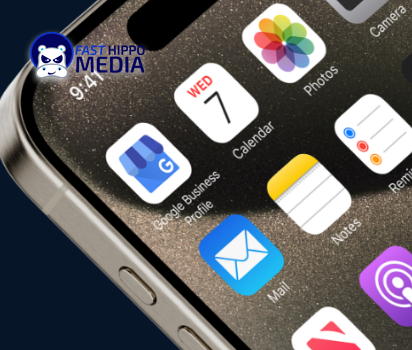
- Rebuild your Google Business Profile with explicit Cowboys Way and The Star address signaling. Geo-tag photos at the actual address. Add Cowboys Way as a service area attribute.
- Earn press placements in publications the AI engines treat as authoritative, such as D Magazine, Dallas Business Journal, Frisco Style, Community Impact, niche trade outlets for your category.
- Build a review velocity program that produces 8–12 recent, substantive, keyword-rich reviews per month. Google’s recency weighting compounds review value over time.
Want this work done for your Frisco business?